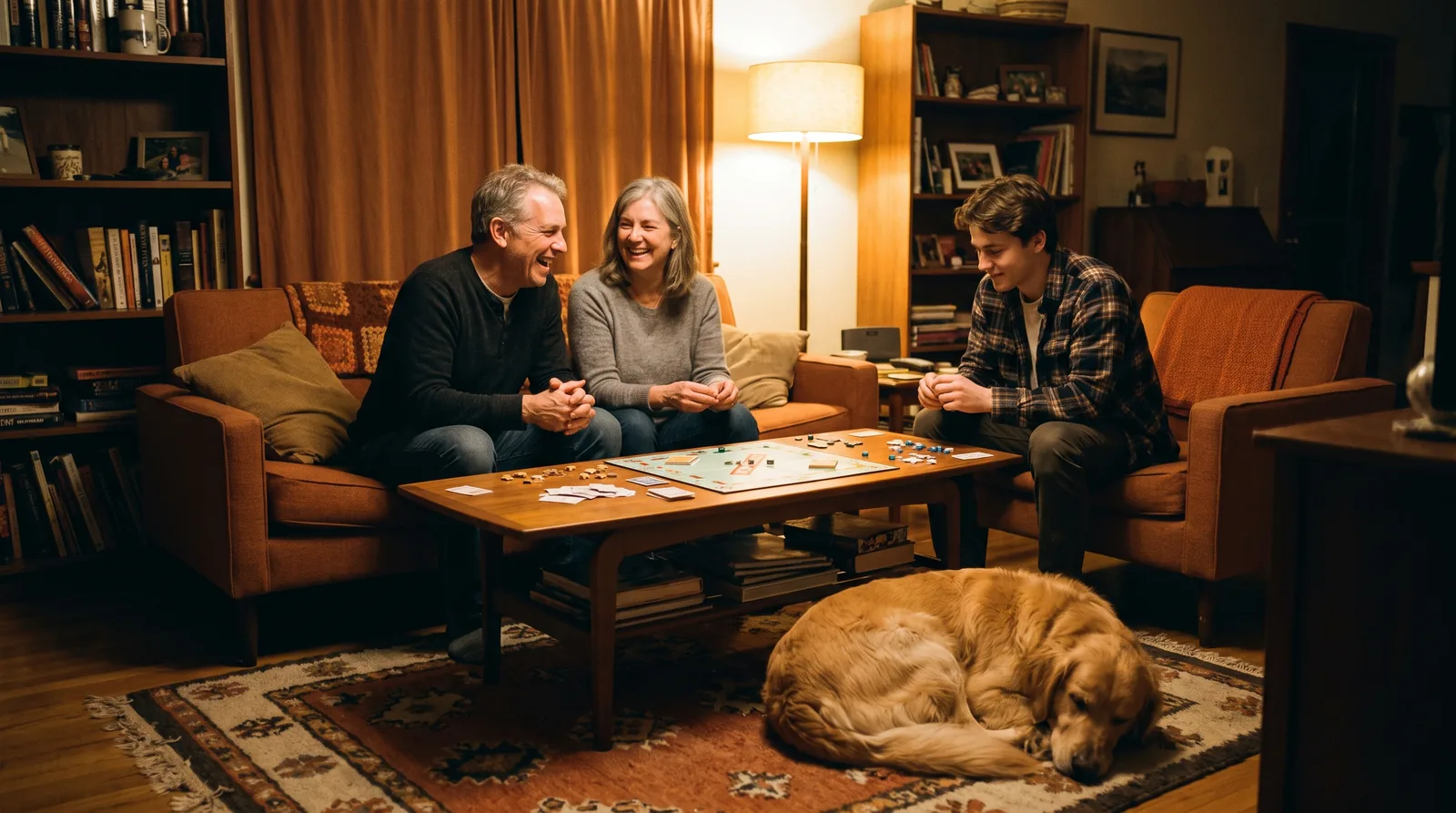
There is a point in many families when the crisis begins to settle. The person they love is in treatment, the substance use has stopped for now, medication is helping, the hospitalizations have ended, and the phone is no longer ringing in the middle of the night. There have been several good weeks, maybe even several good months. From the outside, it can look as though the family should finally be able to relax.
But that is often not what happens.
When a family has spent months or years responding to addiction, psychiatric instability, relapse, emergencies, treatment episodes, unpredictable behavior, or repeated disappointment, stabilization does not instantly make the family feel safe. The crisis may be over, but the family is still living as though another one could begin at any moment.
Parents still glance at the clock and calculate how long someone has been sleeping. A partner hears a slightly different tone of voice and wonders what it means. A missed meeting feels more significant than a missed meeting. A closed bedroom door becomes something to interpret. Someone is irritable after a difficult day, and the entire family quietly wonders whether this is the beginning of something. When the phone rings late at night, a parent's heart races before they even look at the screen.
This is something I see frequently in families who have lived through prolonged instability. They become incredibly skilled at detecting change. They notice tone, sleep, spending, appetite, isolation, rapid speech, late arrivals, missed commitments, and anything that seems just a little different.
Often, there were very good reasons for learning to notice those things. At some point, paying attention may have helped a family recognize that someone was relapsing, becoming manic, deteriorating psychiatrically, or moving toward another crisis. Families learn from experience, and when experience has taught you that small changes sometimes precede very large problems, it makes sense that you become watchful.
The difficulty is that vigilance can remain long after it is useful at the same intensity. A family can become so accustomed to watching for danger that eventually almost anything can feel like information. Sleeping late means something. Being quiet means something. Being unusually happy means something. Being irritated means something. Not answering a text quickly enough means something. A canceled plan means something.
Before long, everyone is back in a familiar position: trying to determine what is happening inside another person before that person has even had the opportunity to experience an ordinary bad day. That is an exhausting way to live, but it is also understandable.
When families tell me they are struggling to relax even though things are going well, I rarely think the answer is simply, “You need to trust more.”
Trust is not an on-and-off switch. It changes through experience. If someone has relapsed repeatedly after appearing well, trust may take time. If a loved one's psychiatric condition has become dangerous with very little warning, appropriate awareness matters. If there has been lying, disappearing, financial chaos, or repeated promises followed by crises, a family cannot simply decide one morning to forget everything it has learned.
But there is a difference between being appropriately aware and being emotionally on patrol. That distinction becomes an important part of recovery for the entire family.
How does a family remain appropriately aware without remaining emotionally on patrol?
I think part of the answer is learning to distinguish between information and interpretation.
“He slept until noon” is information. “He is sleeping until noon because he is depressed again” is an interpretation.
“She sounded irritated on the phone” is information. “She sounded irritated, so something must be wrong” is an interpretation.
“He missed his meeting tonight” is information. “He missed his meeting, which means he is pulling away from recovery” is an interpretation.
Sometimes the interpretation will eventually prove correct. But when families have lived through enough crises, their minds can become very quick at filling in the space between what they know and what they fear. That space is where a tremendous amount of anxiety lives.
One of the things families can begin practicing is allowing information to remain information long enough to see what actually develops. That does not mean ignoring meaningful warning signs. Good recovery planning should include a clear understanding of what truly requires attention. If a person has a history of psychiatric instability, the family and clinical team may identify specific changes in sleep, behavior, medication adherence, thinking, or substance use that deserve a response. If relapse has been part of the history, there may be an agreed-upon plan for what happens if concerns arise.
Having those plans can actually help families watch less, because not every decision has to be made from scratch in a moment of fear. The family knows what it is responsible for noticing. More importantly, it begins learning what it does not have to monitor.
There is another shift that happens here too. Families begin to recognize that they cannot prevent every difficult outcome by paying close enough attention. This can be one of the hardest realities to accept.
Vigilance creates a feeling of participation. If I watch closely enough, maybe I can catch it. If I ask the right question, maybe I can stop it. If I notice the mood change quickly enough, maybe I can intervene before something happens.
Sometimes early intervention absolutely matters. But there are also things a family cannot control through observation. Someone can have a difficult day without the family needing to investigate it. Someone in recovery can feel discouraged without being on the verge of relapse. A young adult can make a poor decision without it becoming a catastrophe. A person with a mental health diagnosis can be irritable, tired, overwhelmed, or private without every emotion being a symptom.
People in recovery still get to be human. So do their families.
Part of healing is creating room for ordinary life to become ordinary again. A slammed door might just be a slammed door. A bad mood might just be a bad mood. A quiet afternoon might just be someone wanting an afternoon alone.
The ability to allow those possibilities can feel surprisingly vulnerable for a family that has spent years learning that seemingly small things sometimes mattered very much.
There is also a cost to constant vigilance that families do not always recognize while they are living inside it. When a parent is continually assessing an adult child's recovery, it becomes difficult for the relationship to become anything other than parent and patient. When a spouse is constantly evaluating whether their partner seems stable, it becomes difficult to return fully to being partners.
Every dinner becomes a check-in. Every conversation carries another layer. Every silence is noticed. Every disagreement risks being interpreted through the lens of illness or recovery. Eventually, the person who has been struggling can feel as though they are never simply being seen as themselves.
At the same time, the family member doing the watching rarely feels free either. Their emotional state becomes dependent on what they observe. If he seems good, Mom has a good day. If she sounds off, her partner cannot concentrate at work. If the treatment team reports progress, everyone breathes. If there is a setback, the family immediately begins preparing for the worst.
Recovery starts to determine the emotional weather of the entire household.
This is where family recovery asks something deeper of everyone. The goal is not only for the person who has struggled to develop a life outside of the crisis. The family has to begin developing one too.
Parents need things to think about that are not their adult child's recovery. Partners need conversations that are not about symptoms, meetings, medication, or treatment. Families need dinners where no one asks how therapy went. They need vacations that are not tests of whether someone can handle being away from their support system. They need laughter that is not followed immediately by the thought, “I hope this lasts.”
They need the freedom to enjoy what is good without demanding that it guarantee what happens next.
That does not happen overnight. Often, the family has to relearn what appropriate attention feels like. Maybe I notice something without immediately asking about it. Maybe I allow the person I love to bring a problem to me rather than trying to identify it before they do. Maybe I rely on the recovery plan we created instead of continually inventing new precautions. Maybe I ask myself whether I am responding to what is actually happening today or to something painful that happened six months ago.
And maybe, when things are going well, I let them be going well.
That last one can be especially difficult. Families sometimes believe they are protecting themselves by staying prepared for disappointment. If they do not get too comfortable, maybe it will hurt less if something happens.
But living in anticipation of the next crisis does not prevent the crisis. It simply allows a crisis that has not happened yet to occupy the present.
There is a difference between knowing that recovery contains uncertainty and allowing uncertainty to run the household. No family gets a guarantee—not after treatment, not after one year of sobriety, not after the right medication is found, and not after someone returns to work or moves into their own apartment.
But the absence of a guarantee does not mean the family has to live permanently braced for impact.
The work becomes learning how to trust the structure you have built, respond when there is actually something to respond to, and continue living in the meantime. That might mean knowing the real warning signs without searching for them every day. It might mean having clear boundaries so you do not have to continually negotiate them. It might mean allowing other people, including therapists, physicians, sponsors, recovery coaches, or treatment professionals, to hold parts of the support system so that the family does not feel responsible for everything.
And sometimes it means recognizing a moment that would once have sent everyone into alarm and noticing that this time, the family handled it differently. Someone was upset, and nobody panicked. The phone went unanswered for an hour, and no one created a story about why. A difficult week happened, and the family did not immediately assume everything was unraveling. There was a setback, and everyone returned to the plan instead of returning to chaos.
Those are important signs of family recovery too.
Eventually, I want families to arrive at a place where awareness remains but fear is no longer driving every interaction. Where they can see a concern without immediately catastrophizing it, ask a question without interrogating, and offer support without taking over. Where they can recognize that vigilance once served an important purpose and still decide that they do not want to live there forever.
There is a life after crisis. Not a life without uncertainty, because none of us has that, but a life where uncertainty no longer gets to occupy every room in the house.
If your family has moved beyond the immediate crisis but finds that fear, monitoring, and waiting for the next problem are still shaping daily life, that is meaningful work too. At Interventions With Love, we help families understand what they have lived through, decide what awareness is still useful, and begin creating a family life that is no longer organized entirely around what might go wrong.